
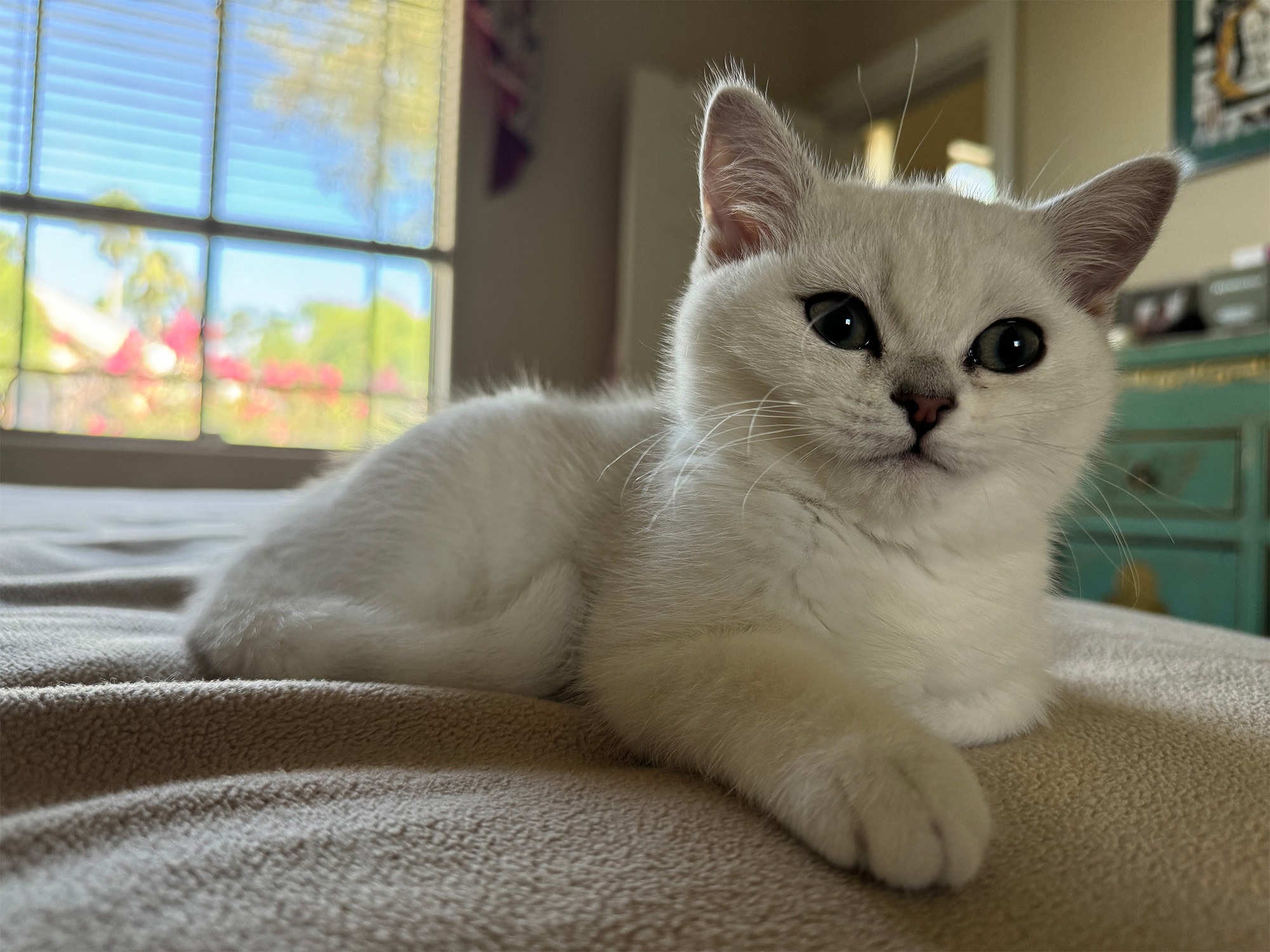
Stunning Coat Colors
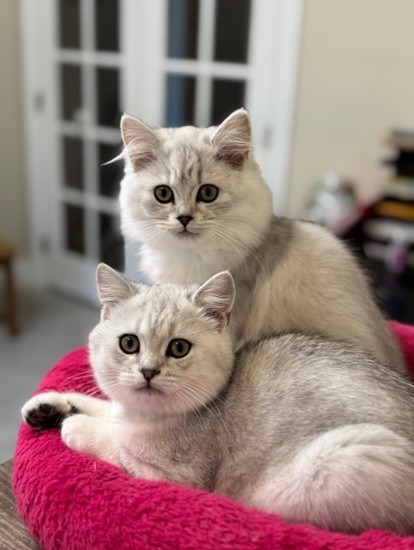
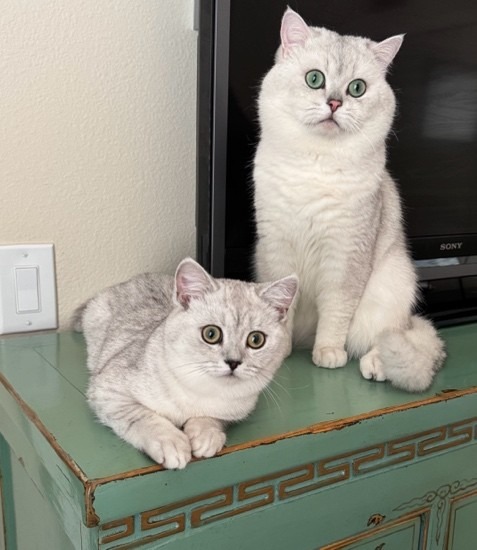
At BritishEstate Cattery, we offer silver coat colors, including silver shaded, silver chinchilla, and silver spotted tabby. The illustrious “Silver Shaded” and “Silver Chinchilla” feature dark tipping on a silvery-white base.

Our Specialty
Silver Coat Colors
We focus on breeding the highly sought-after black silver shaded, silver chinchilla, and silver spotted tabby. We decided to specialize in breeding the silver gene due to its distinctive coloration, which is noted for its elegance, sophistication, rarity, and attractive shimmering appearance.
Silver British Shorthairs and Longhairs exhibit the same calm temperament, affectionate nature, and intelligence as other color variants of their breed. The distinction lies solely in the coloration of their coats.
Our goal is to breed high-quality silver British cats while maintaining their distinct characteristics. Silver coloring and patterns are uncommon, especially in the United States, which makes these cats more expensive compared to other colors within the breed.
Almost White & Quite Rare
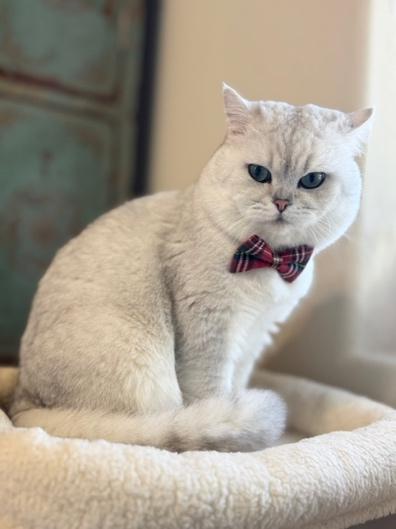
Silver Chinchilla
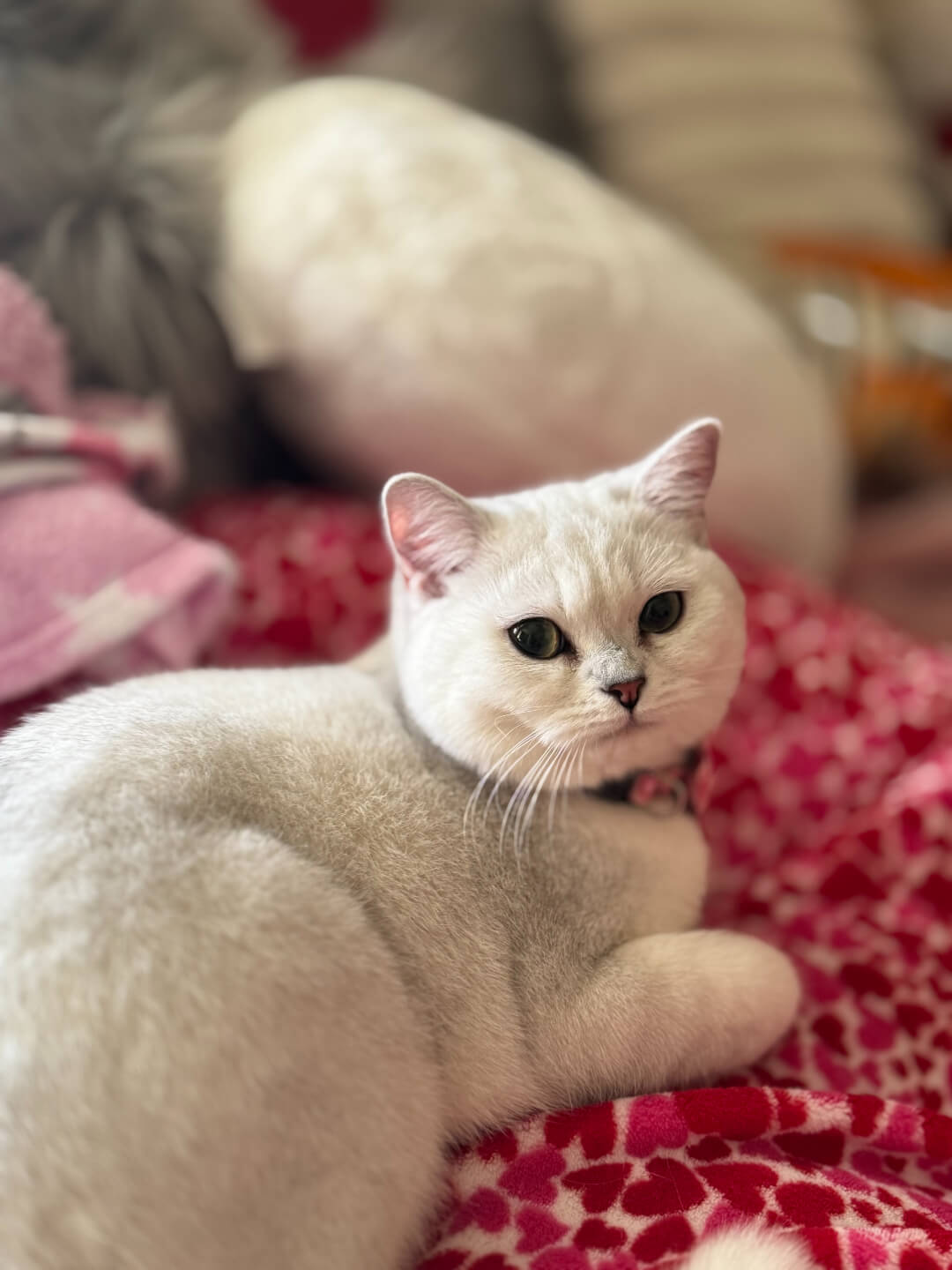
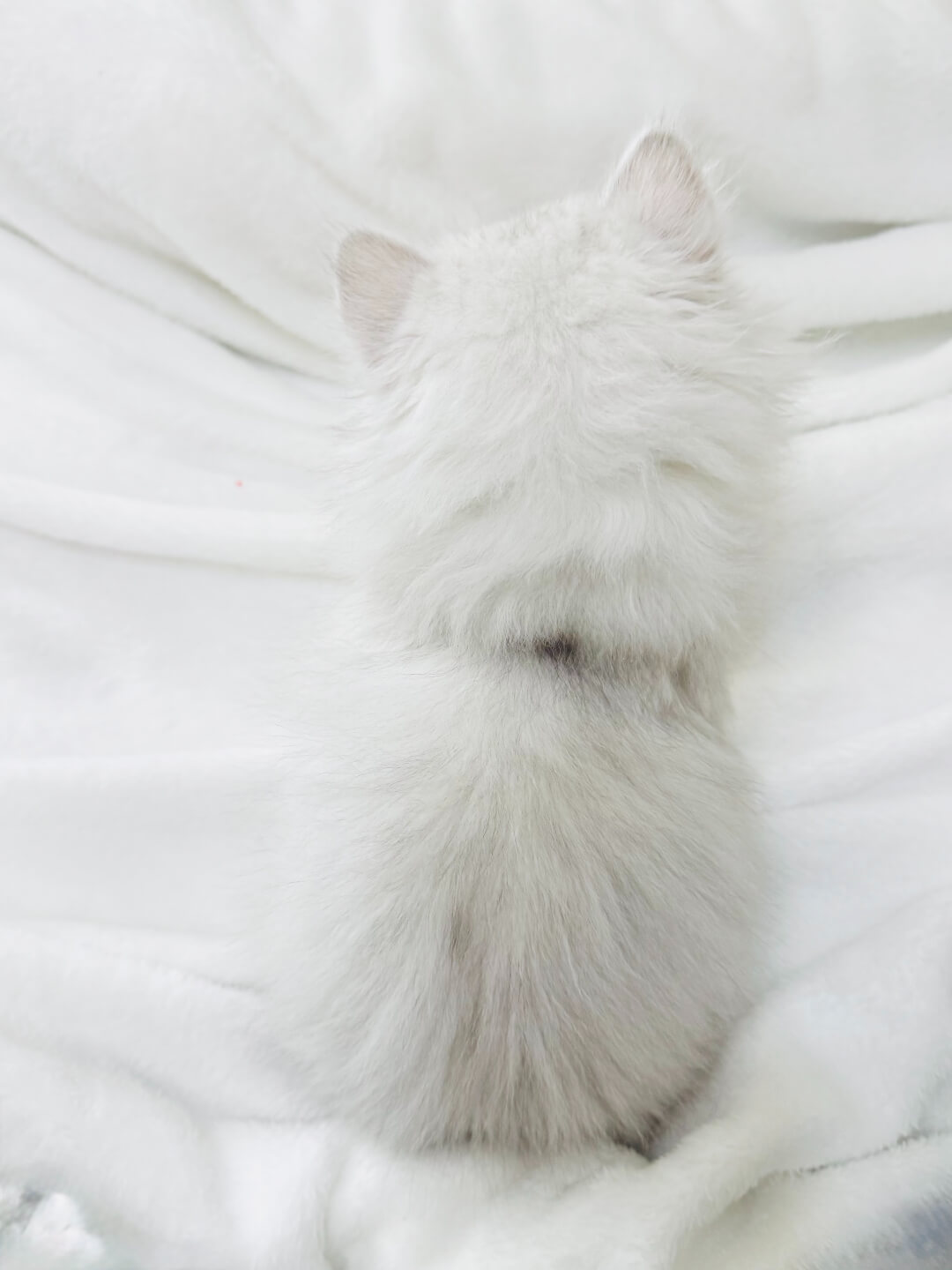
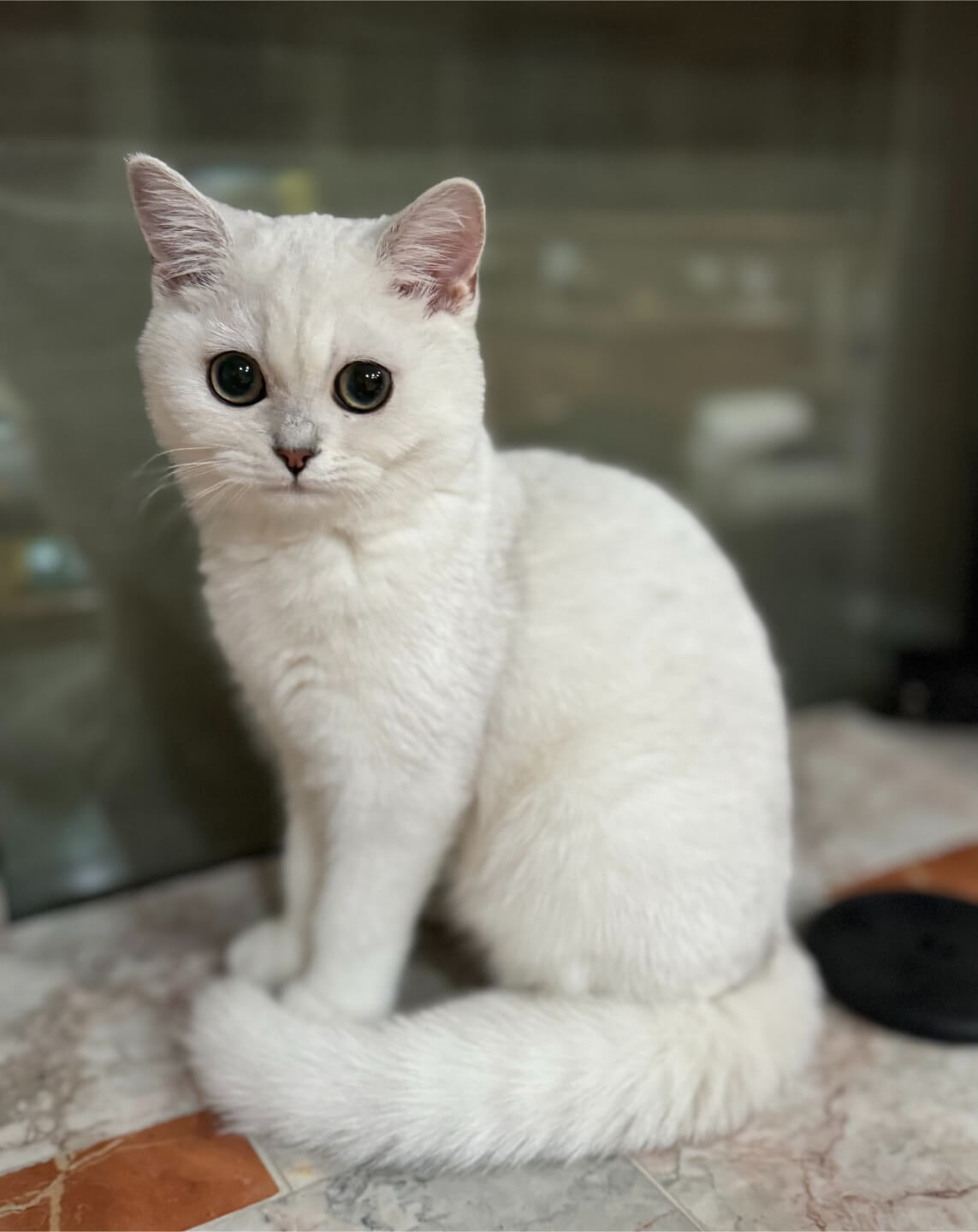
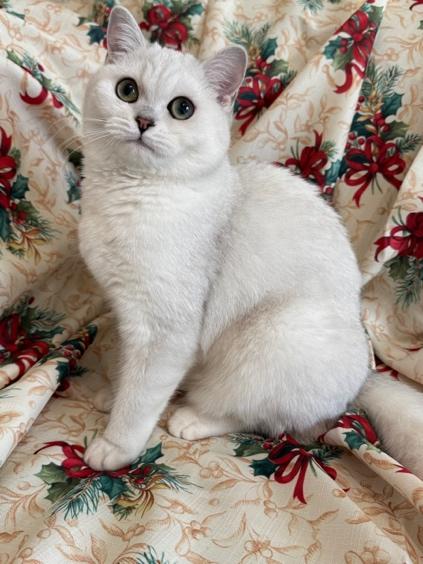
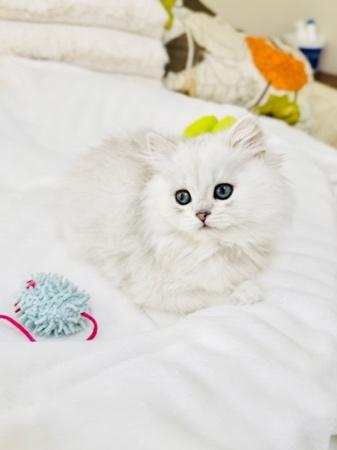
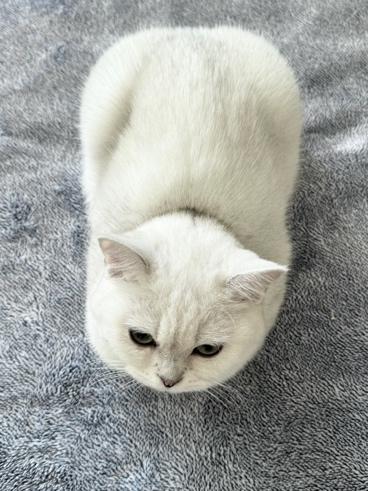
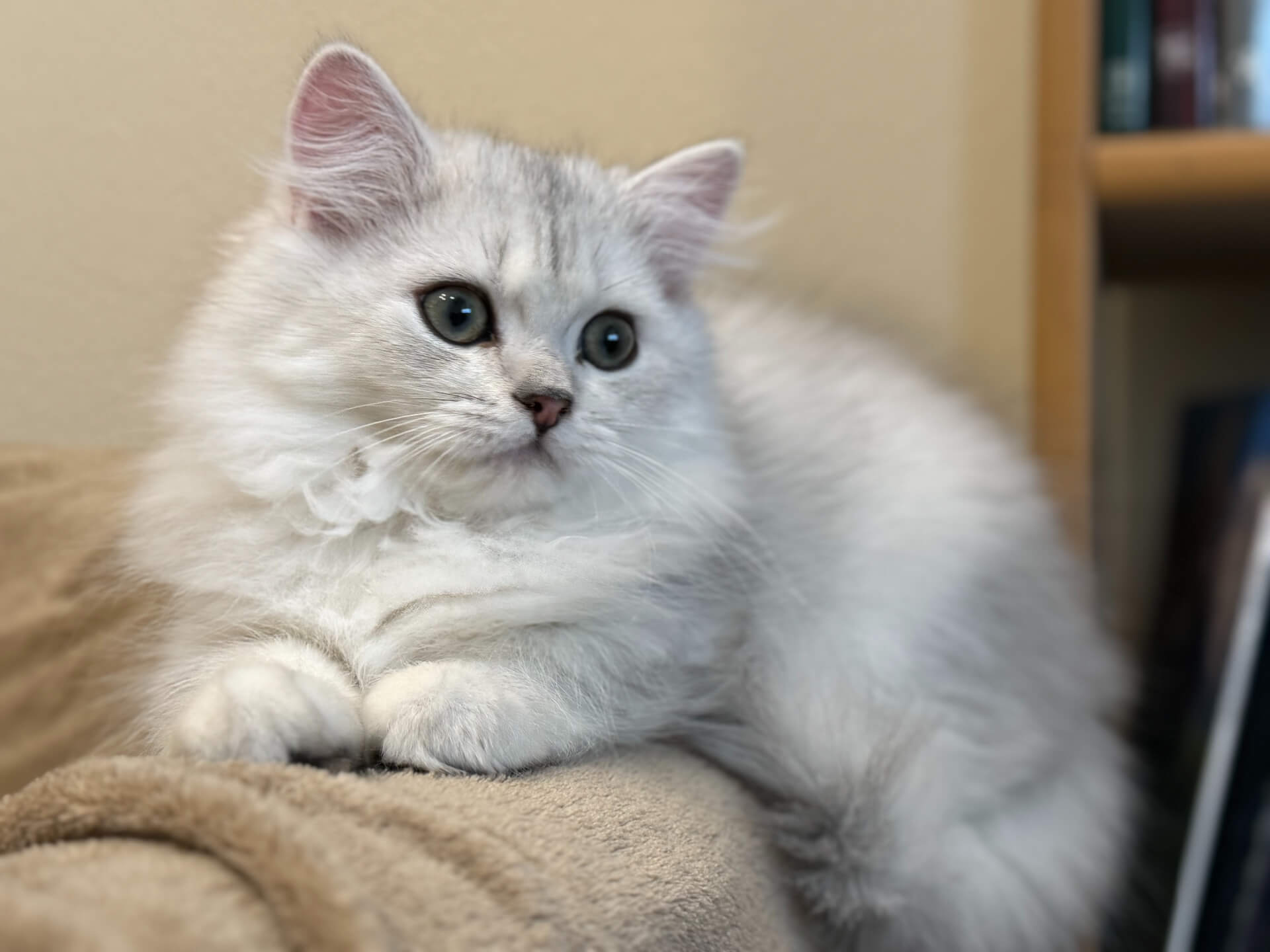
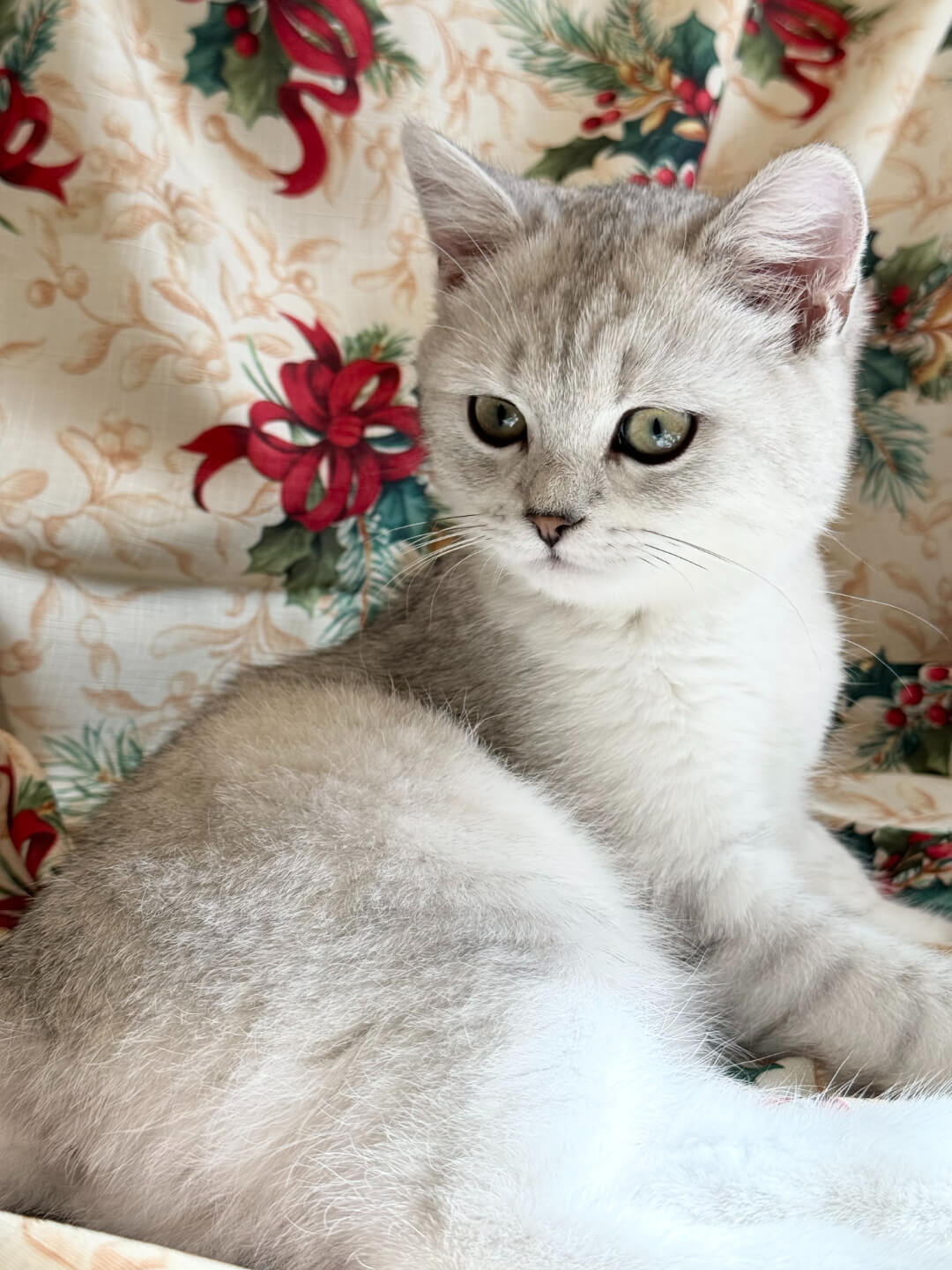
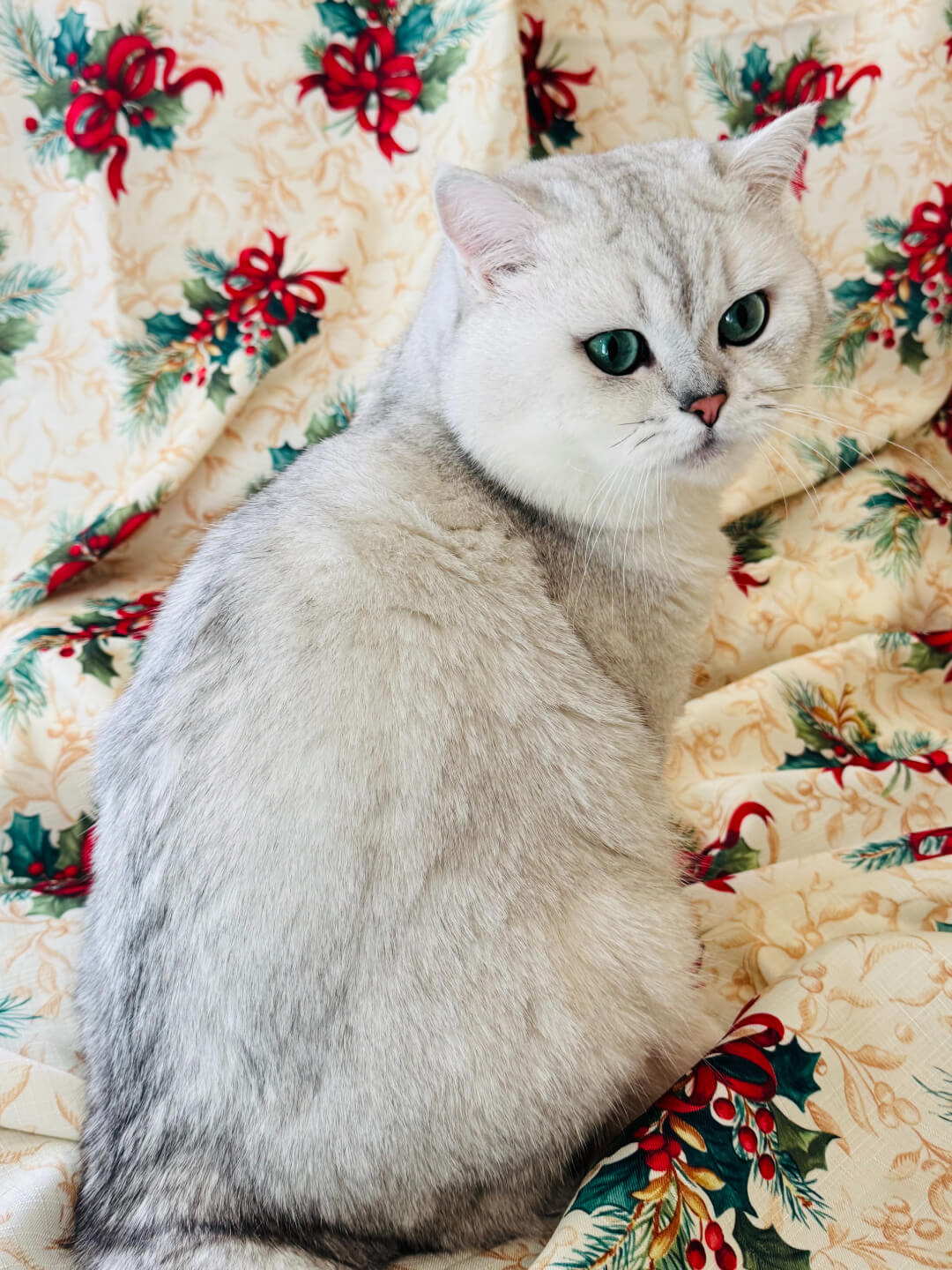
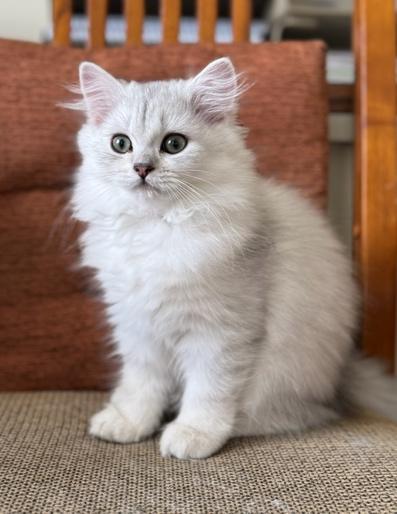
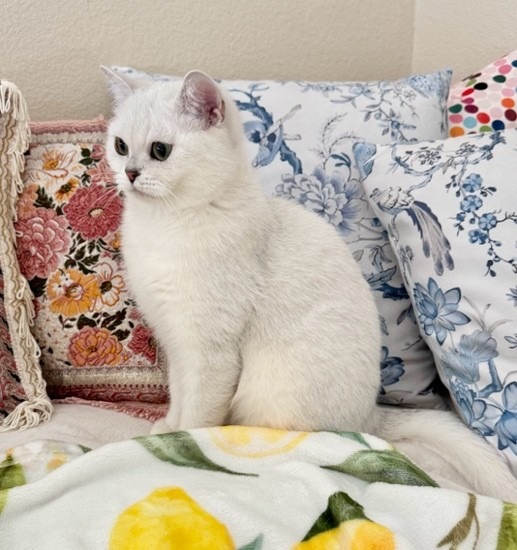
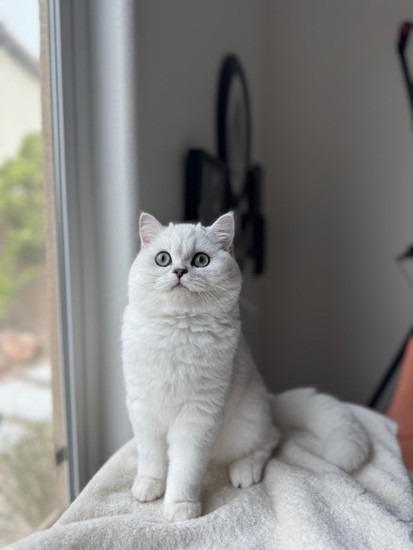
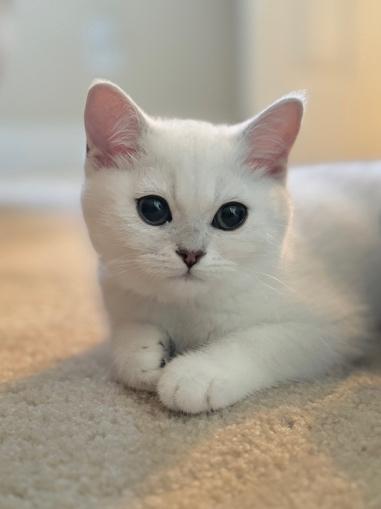
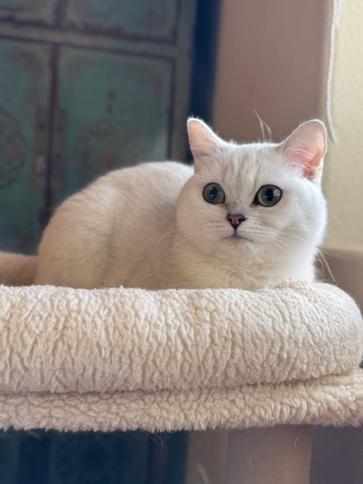
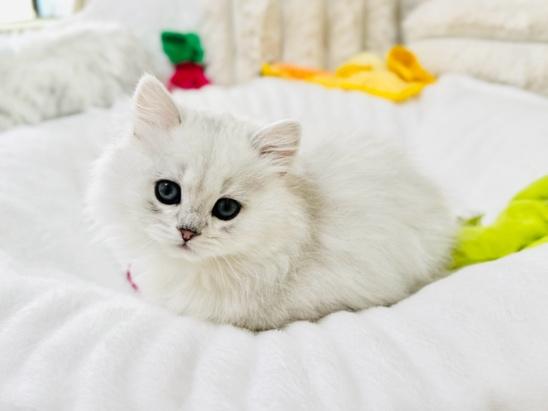
The Silver Chinchilla is a special kind of “silver shaded” or “black tipped” British Shorthair, characterized by its uncommon coat coloration. While the coat may appear pure white at first glance, it is differentiated by a white base lightly interspersed with black-tipped fur, resulting in an elegant silver sheen. In chinchilla coats, the black-tipping is even less, covering only the very tips of the individual hairs by approximately one-eighth of its total length. They may display some tabby markings, but these should be very minimal to be classified as a chinchilla.
They have green eyes, but the exact shade can vary, and have black paw pads. The silver chinchilla coat is regarded as the most luxurious among British Shorthair and Longhair colorations, and it is a highly sought-after variant within the range of silver coat colors.
A chinchilla colored Queen may give birth to silver kittens without the chinchilla coloration, depending on the genetics of both parents. In breeding, the development of a chinchilla coat color requires the alignment of specific genes, which contributes to its rarity. Hence, acquiring a British Shorthair or Longhair kitten with a chinchilla coat involves a higher price due to its rarity.
Shimmering Silver Coats
BLACK TIPPED SILVER SHADED
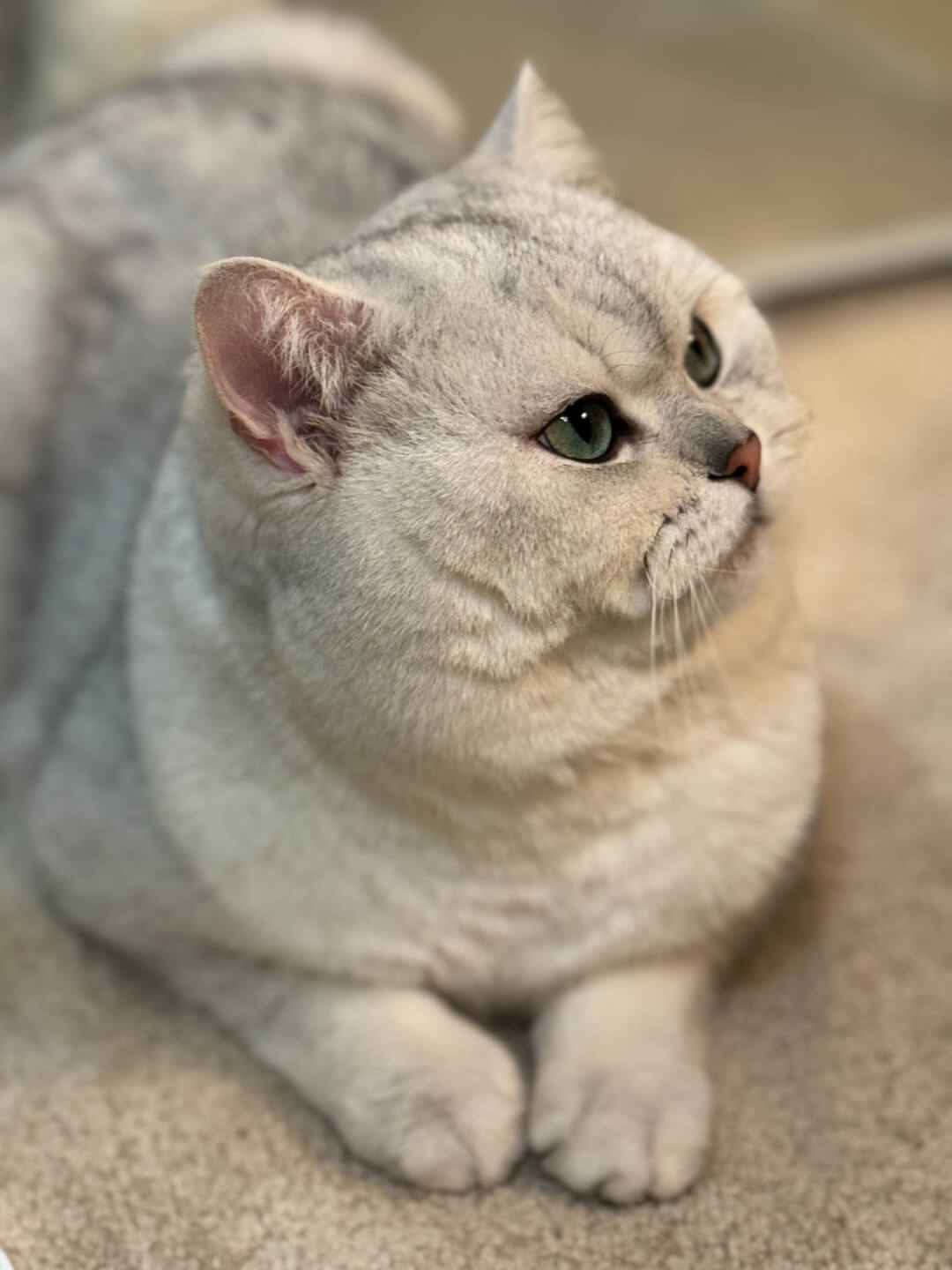
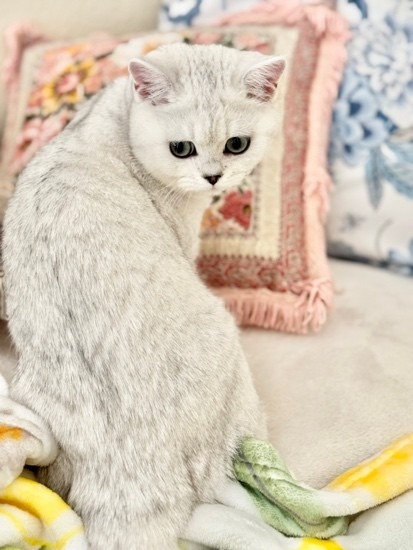
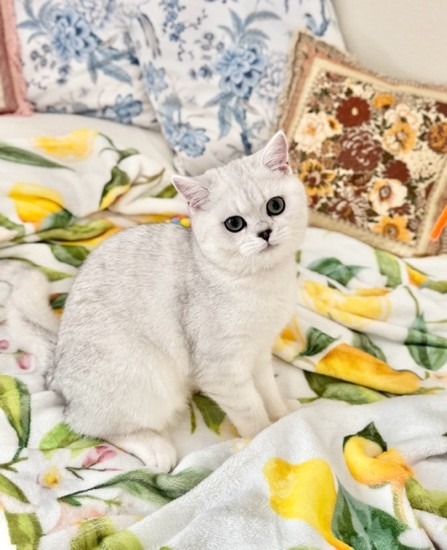
Silver shaded coat colors have a striking white undercoat and darker tipped hairs, with a more prominent silver appearance than the chinchilla. These cats have a predominantly white or pale silver undercoat. They have silver-colored shading on the tips of the hairs, primarily on the back, sides, head, ears, and tail. The chin, stomach, and underside of the tail are typically white. The amount of tipping is significant, and a “Black Silver Shaded” refers to the colored tipping that extends about one-third of the way up the hair shaft. Hence, their coat appears darker than a chinchilla. They typically have green eyes that vary in hue and black paw pads. They possess a shimmering and luxurious appearance of silver.
This coat color is also uncommon and hard to find in the United States, which is also a determining factor in the price. There are not many breeders who specialize in the silver color genes, and BritishEstate Cattery is among the few with quality cats from strong and healthy European blood lines.
The Birth of the Silver Shaded Coat Color
HISTORY
The Silver Shaded British Shorthair first appeared in England during the early 1970s, thanks to Norman Winder, a well-known and accomplished British Shorthair breeder with the prefix Peerless. Winder was not only a senior cat show judge in both the United Kingdom and for FIFe (Fédération Internationale Féline), but he was also highly regarded for his expertise in breeding British Shorthairs with Tipped or Shaded coats. He founded the British Tipped Club, which is now called The British Shorthair Cat Club.
Winder undertook an experimental crossbreeding to introduce a silver coat to the British Shorthair breed. By mating the British Shorthair Silver Tabby with the Persian Chinchilla—known for its silver tipping gene—he produced offspring exhibiting a silver undercoat complemented by subtle black tipping at the fur’s ends. This breeding process resulted in the British Shorthair Black Silver Tipped, commonly referred to as the “Silver Shaded.” The terms “black tipped,” “tipped,” and “silver shaded” are often used interchangeably, all referring to the same color.
OFFICIAL RECOGNITION & MODERN DAY
Cat clubs in the United Kingdom officially recognized this new color by 1980, signifying its formal introduction into the cat fancy. In 1981, Winder’s Peerless Silver Jule (GCCF SR/NS 39108 – BRI ns12), a black tipped/silver shaded male, attained Grand Champion recognition. Notably, several cats of his ancestral line had previously earned Champion titles during the 1970s.
Since then, breeders have further developed the Silver Shaded and the Silver Chinchilla British Shorthair into the exquisite show cats and beloved pets as seen today, prized for their unique, luminous coats.
Simplified Terminology
The Genetics Behind the Silver Chinchilla & Silver Shaded
Silver chinchillas and silver shaded cats have distinct genetics that result in their unique coat colors. This involves the interplay of the Agouti gene (A), the Inhibitor gene (I), and the Wideband gene (Wb).
Inhibitor Gene (I): This dominant gene (I) is responsible for the silver coloration. It suppresses the full development of melanin, particularly the yellow pigment (phaeomelanin). It does not remove pigment entirely, but rather lightens the base of the hair, creating a silvery or white undercoat while the tips remain darker.
Wide Band Gene (Wb): This gene increases the width of the lighter bands on the agouti hairs, contributing to the “tipped” appearance of the chinchilla coat. It influences the extent of the lighter area on the hair shaft, with shaded silvers having color extending further down the hair than chinchilla silvers.
Agouti Gene (A): The dominant allele (A) of this gene controls the ticking, or banding of color on the individual hairs of the cat’s fur. The Agouti gene is necessary for the expression of silver in tabby cats, as it creates the banded pattern. This is essential for the chinchilla pattern, as it allows for the lighter bands of color that are then affected by the inhibitor gene. The inhibitor gene then lightens the background color of the agouti hairs, creating the silver effect.
Tipping: The term “tipping” refers to the colored tips on the hairs of shaded and chinchilla cats. The extent of tipping distinguishes shaded from chinchilla, with shaded silvers having more color at the tip than chinchillas.
Ticked Tabby Pattern (Ta): The ticked tabby gene (Ta) is believed to be crucial for the chinchilla pattern, as it removes or reduces other tabby patterns (like mackerel or spotted) to allow the tipped appearance to be the dominant feature.
Tabby Pattern (Ta): The underlying tabby pattern also plays a role. Chinchillas are often associated with a ticked tabby pattern, where the banding is subtle.
In essence, silver chinchilla cats are essentially tabby cats with the inhibitor gene (I) acting on the agouti hairs, causing them to be tipped with color while the rest of the hair is a silvery white. The specific expression of this silvering depends on the interaction of these genes and the underlying tabby pattern.
Essentially, a silver shaded British Shorthair inherits the Inhibitor gene (I) which gives them the silver appearance, and the Wideband gene which determines the extent of the tipping, all on a background of the Agouti gene (which usually results in a tabby pattern)
MORE TO COME!
